
George Plimpton was an American journalist, editor, and author associated with participatory reporting. Born in 1927, he studied at Harvard and King’s College, Cambridge, and served in the US Army. He helped establish The Paris Review in 1953 and remained its editor for five decades. He died in 2003.
For several sports books, Plimpton entered training or competition as an amateur among professionals. His experiences included pitching to major-league baseball players, joining a football training camp, boxing, playing tournament golf, and appearing as a hockey goaltender. Those projects combined accounts of his own limitations with observations of the people who made their living in each sport.
He also wrote profiles, fiction, and books about subjects outside sport, and edited literary collections. His invented pitcher Sidd Finch first appeared in an April Fool’s magazine story before becoming the subject of a novel.
George Plimpton Books
As an Amazon Associate I earn from qualifying purchases.
Football Books
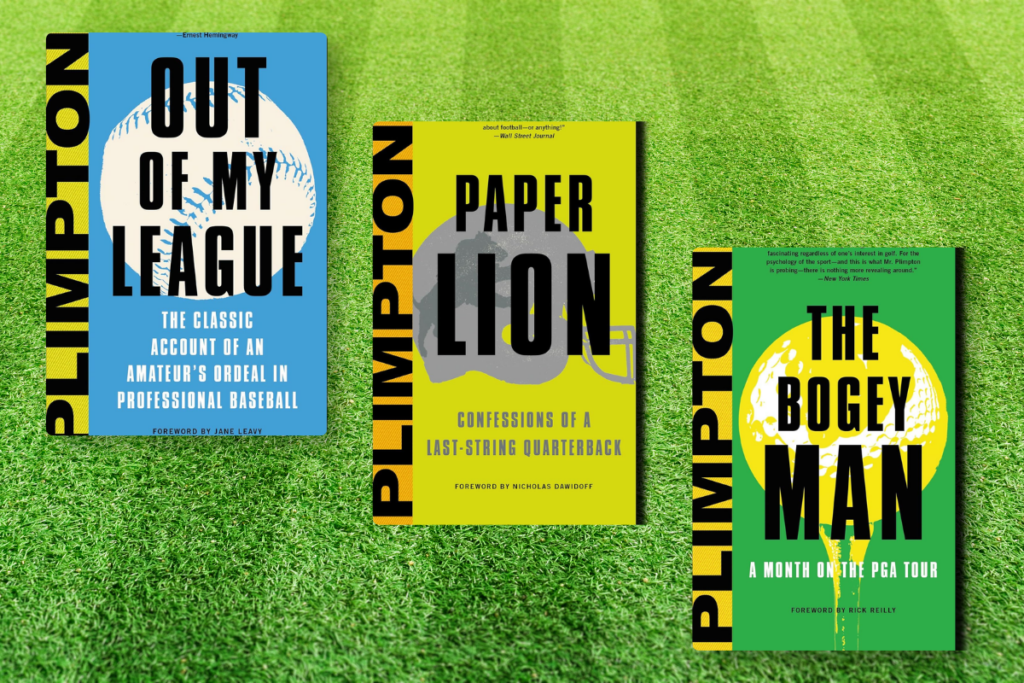
Paper Lion: Confessions of a Last-String Quarterback: Plimpton joins the Detroit Lions’ training camp as an amateur quarterback to investigate professional football from within. Practice, meetings, relationships with players, and an appearance in a scrimmage reveal the demands he cannot meet as an outsider. The account uses his unsuccessful attempt to play the position to describe the team’s working life, the skills of professionals, and the distance between watching football and participating in it.
Mad Ducks and Bears: Returning to professional football, Plimpton builds much of this account around former Detroit Lions linemen Alex Karras and John Gordy. Their recollections, practical jokes, attitudes, and experiences provide a different view of the game from its official presentation. The book also returns Plimpton to football participation, connecting individual personalities with the physical demands, professional uncertainties, and changing circumstances of players’ lives.
One More July: A Football Dialogue with Bill Curry: Plimpton accompanies veteran centre Bill Curry on a journey toward another training camp in Green Bay. Their conversations revisit Curry’s teams, coaches, injuries, union responsibilities, and memories of playing with leading NFL figures. The trip becomes an account of a player deciding whether he can continue, combining stories from earlier seasons with the practical and emotional circumstances of approaching the end of a football career.
Baseball Books
Out of My League: Plimpton attempts to pitch against major-league hitters in an exhibition arranged around the All-Star Game. Preparation and instruction cannot remove the gap between his amateur abilities and the professionals facing him. His account follows the event from anticipation to performance, using his difficulties on the mound to describe pitching, the players involved, and the difference between a spectator’s understanding and the work required in competition.
One for the Record: The Inside Story of Hank Aaron's Chase for the Home Run Record: Plimpton follows Hank Aaron’s pursuit of Babe Ruth’s career home-run total and the attention surrounding the eventual record-breaking hit in 1974. Conversations and reporting examine Aaron’s approach to batting, public pressure, and the pitchers who faced him. The account places the famous achievement within the circumstances of its pursuit, including the threatening messages and media scrutiny directed at the player.
The Curious Case of Sidd Finch: This novel expands the fictional story of Sidd Finch, an apparently unknown pitcher capable of throwing a 168-mile-per-hour fastball. As the New York Mets investigate and attempt to use his abilities, Finch’s interests in Buddhism and life outside baseball complicate their plans. The narrative develops a character first introduced in Plimpton’s Sports Illustrated April Fool’s article into a longer story about exceptional talent and professional expectations.
Golf Books
The Bogey Man: Plimpton enters the professional golf circuit as an amateur, attempting to understand tournament play by participating in it. His account follows preparation, rounds, encounters with established players, and the difficulty of controlling his own game. The contrast between professional standards and his performance supplies the structure for observations about concentration, competition, golf’s routines, and the people who work within the tournament environment.
Boxing Books
Shadow Box: An Amateur in the Ring: Plimpton’s attempt to box with former light-heavyweight champion Archie Moore forms part of an account of fighters and the people surrounding them. Muhammad Ali, Joe Frazier, writers, and other observers appear in scenes from gyms, dressing rooms, and major contests. His participation provides one perspective within a wider examination of boxing’s skills, rituals, personalities, and the attraction it holds for spectators and literary observers.
Hockey Books
Open Net: A Professional Amateur in the World of Big-Time Hockey: Plimpton trains with the Boston Bruins and plays several minutes in goal during an exhibition against the Philadelphia Flyers. His preparation and brief appearance reveal the difficulty of the position and the skills of the professionals around him. Accounts of players and hockey history accompany the experiment, connecting an amateur’s immediate fears with observations about the routines, physical demands, and working environment of professional hockey.
Competition and Collected Writing
The X Factor: A Quest for Excellence: After losing a horseshoe match to George H. W. Bush and receiving an invitation for a rematch, Plimpton investigates what allows some competitors to outperform equally talented opponents. He questions athletes, coaches, doctors, and business leaders about preparation, confidence, motivation, and pressure. Their differing explanations form a search across sport and business for qualities that cannot be reduced to technical ability alone.
The Best of Plimpton: This retrospective collection brings together profiles, essays, articles, and short fiction from Plimpton’s writing career. Its selections move beyond one sporting experiment to present different subjects and literary forms. Accounts of public figures and personal experiences sit alongside invented narratives, placing his participatory sports journalism within the wider work of a magazine editor and author who wrote about several aspects of cultural life.
Baseball: A Literary Anthology: Edited by Nicholas Dawidoff, this collection gathers baseball writing in several forms, including fiction, poetry, reporting, and oral history. Plimpton is among the contributors describing players, spectators, and the culture surrounding the game. The volume sets his work beside pieces by writers from different generations, tracing baseball through contrasting accounts rather than presenting another continuous example of his own participatory reporting.